Brief Overview
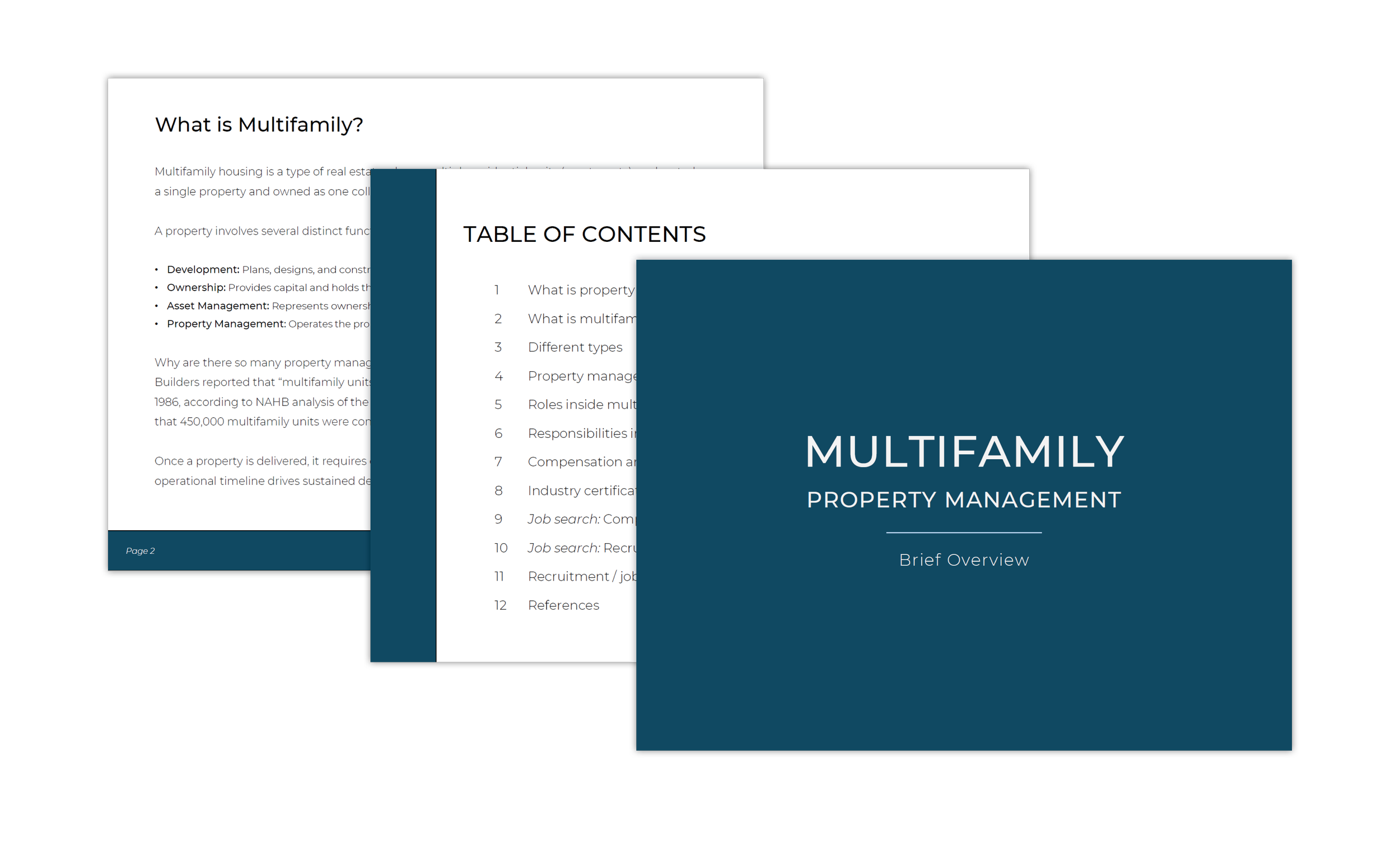
This guide provides a brief overview of multifamily property management. Read below or click the guide image to download a PDF version.
What is Property Management?
Property management is the professional oversight of real estate on behalf of an owner to protect and enhance the asset’s value while ensuring the property is operated safely, legally, and efficiently. It includes the coordination of people, processes, and resources to operate a property day to day, such as leasing, customer service, maintenance, financial management, and regulatory compliance. The scope of property management varies by property type, customer, length of occupancy, and regulatory environment, with multifamily being one category within the broader property management discipline.
Examples of property management sectors include:
Multifamily
Single-family rentals
Cooperative and condominium housing
Hospitality or short-term vacation rentals
Self-storage
Office, commercial, retail, and industrial

What is Multifamily?
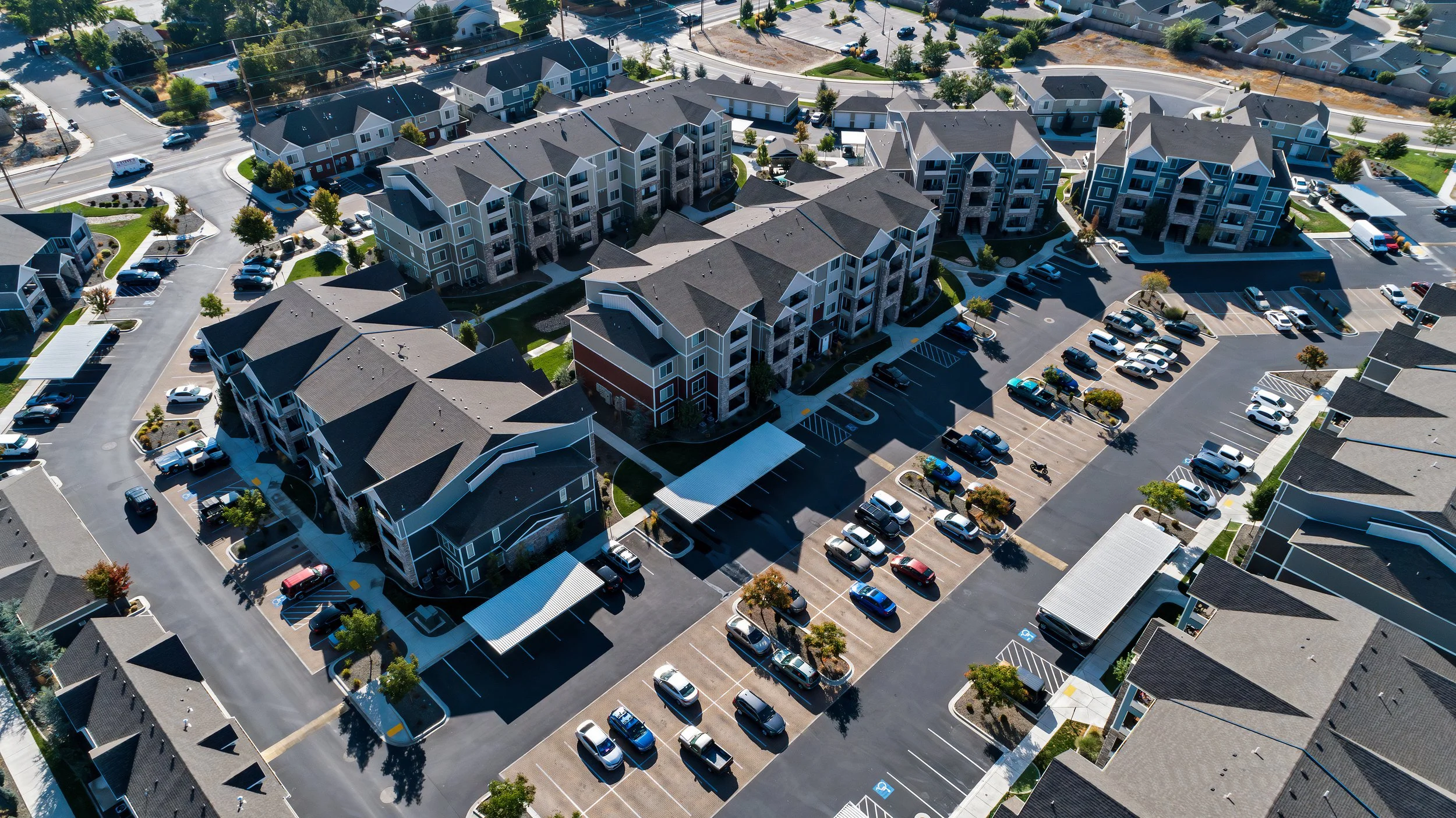
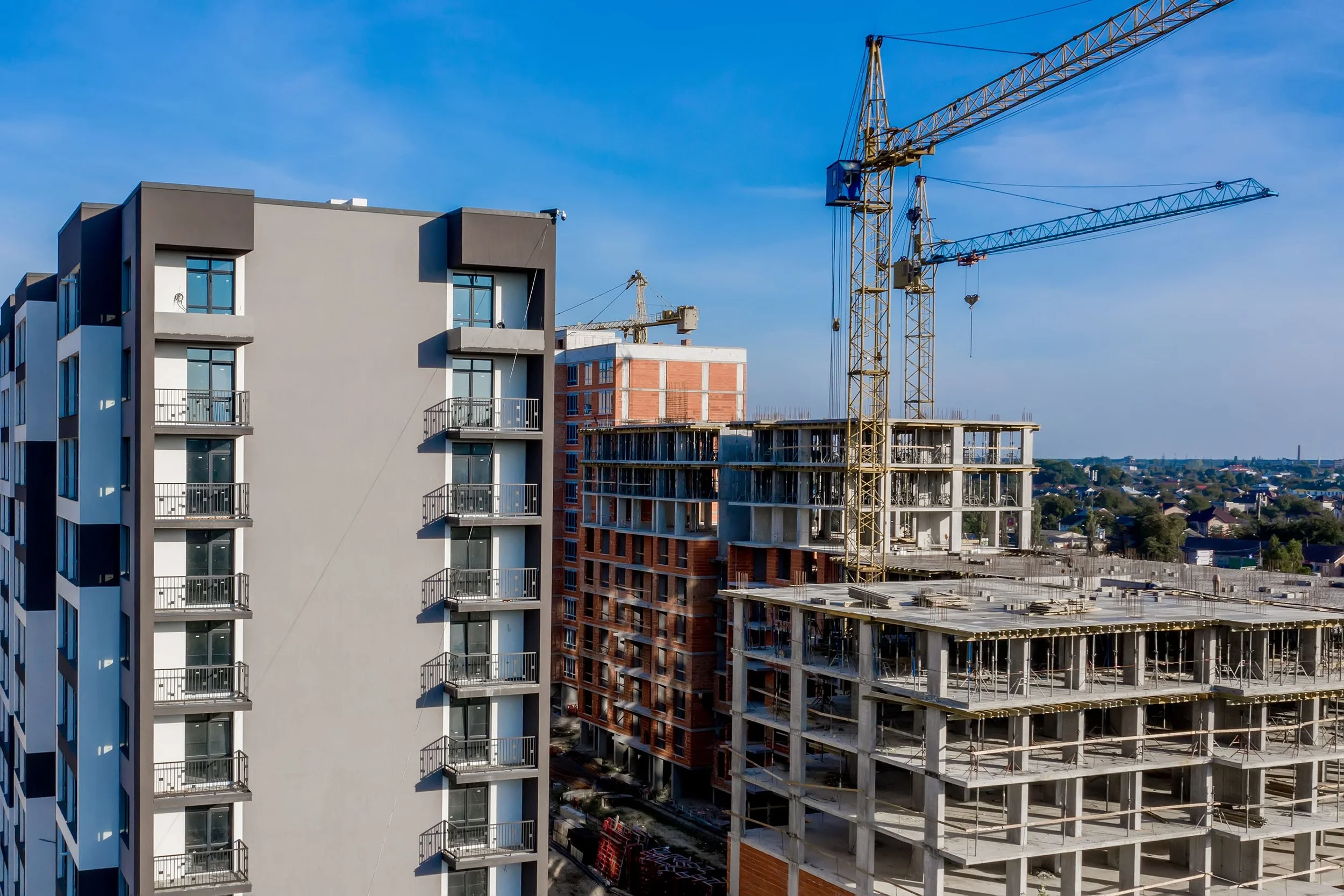
Multifamily housing is a type of real estate where multiple residential units (apartments) are located on a single property and owned as one collective asset.
A property involves several distinct functions:
Development: Plans, designs, and constructs the property
Ownership: Provides capital and holds the asset through public, private, or individual investment structures
Asset Management: Represents ownership by setting and overseeing financial performance expectations
Property Management: Operates the property, including leasing, maintenance, and resident services
Why are there so many property management jobs available? The National Association of Home Builders reported that “multifamily units completed reached 608,000 in 2024—their highest level since 1986, according to NAHB analysis of the Census Bureau’s Survey of Construction.” NAHB also reported that 450,000 multifamily units were completed in 2023. Once a property is delivered, it requires ongoing management for the entire life of the asset. This long operational timeline drives sustained demand for property management roles.


The Different Types
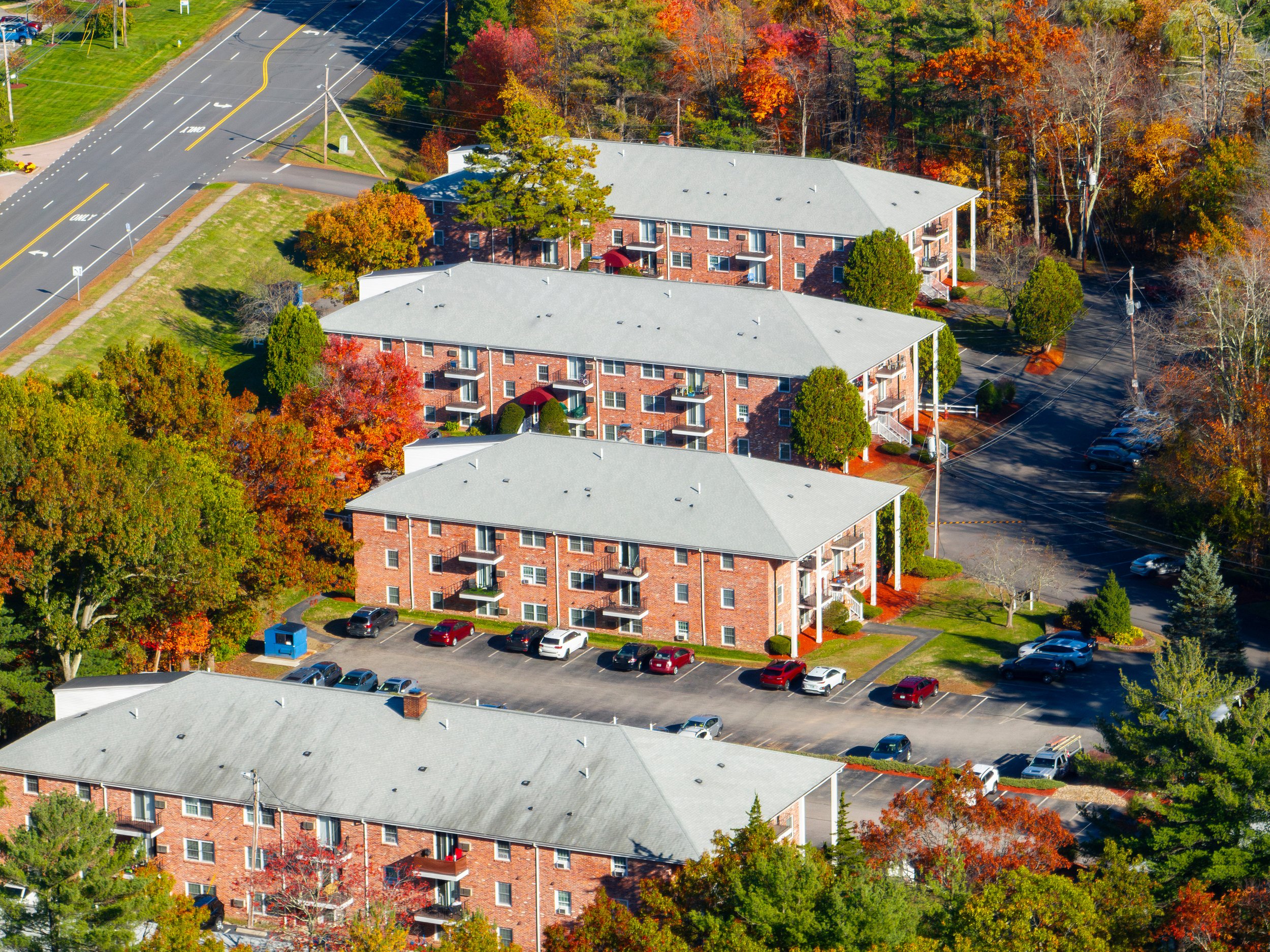
While all apartments serve the same purpose, providing housing, it is rare for any two multifamily properties to be identical. Multifamily buildings can take many forms, including but not limited to:
High-rise: Tall buildings, often located in urban areas
Mid-rise: Moderate height, typically 4–7 stories
Garden-style: Low-rise buildings, often 1–3 stories
Some multifamily properties are designed to serve specific populations or housing needs, while others provide general housing. Examples of purpose-built properties include:
Student Housing: Located near universities, leasing is often by the bedroom with shared living spaces
Senior Housing: Age-restricted, commonly 55+, amenities and layouts designed for older residents
Affordable Housing: Designed to provide lower-cost rental options, may include programs such as LIHTC, HUD, or other local or state initiatives
Property Management Companies
Property management companies are responsible for staffing and maintaining the day-to-day operations on behalf of ownership. Some companies develop, own, and manage properties. These are often referred to as vertically integrated organizations.
Owner-operators: Own and manage their own properties, staff and operate the property directly
Third-party management: Manage properties on behalf of owners for a fee, employ the on-site and corporate teams that operate the property
The number of property management companies in the United States is constantly changing as new companies are formed or acquired. The National Multifamily Housing Council (NMHC) publishes an annual list of the top 50 management companies, ranked by total units managed.
Property management companies typically grow in three ways: purchasing properties as owner-operators, acquiring other management companies, or winning new management assignments from owners.



Roles Inside Multifamily Property Management
Companies are often structured very differently behind the scenes, even though they may look similar to residents. In some companies, most of the work is handled directly at each property by the on-site team; the same people who interact with residents every day are also responsible for handling administrative tasks, compliance, and marketing.
Over the last decade, many companies have shifted certain responsibilities from on-site teams to centralized corporate support teams. Functions such as accounting, marketing coordination, and compliance have increasingly become handled at the corporate level. This shift is designed to reduce the administrative burden on on-site staff and allow them to focus more on leasing, resident satisfaction, and day-to-day community operations.
There are many variations to the titles used to describe the different roles in property management. These are a few of the common roles:
Onsite Office Roles: Leasing Agent, Compliance Specialist, Assistant Property Manager, Property Manager
Onsite Maintenance Roles: Maintenance Supervisor, Maintenance Technician, Make Ready Specialist, Housekeeper, Groundskeeper
Corporate Roles: Director, Regional Manager, Marketing, Accounting



Responsibilities in Property Operations
The roles between onsite and corporate teams vary by company, but all exist to divide and manage the responsibilities required to operate a property. Example responsibilities include:
Marketing and leasing to attract prospective renters
Providing customer service and handling resident requests
Facilitating resident move-ins, renewals, and move-outs
Collecting rent and managing resident accounts
Maintaining lease agreements and compliance requirements
Maintaining accurate records in property management software
Overseeing accounts payable, financials, and budgeting
Evaluating performance to meet expectations
Managing vendors and service contracts
Completing repairs to apartment interiors
Maintaining the upkeep of the grounds
Maintaining amenities, parking lots, and building structures
Preparing vacant homes for new renters
Conducting inspections, maintaining compliance with safety codes
Upholding fair housing, local, state, and federal laws
Planning for property improvements
Compensation & Requirements
Compensation: Salaries vary by job type, experience, and market. During the last few years, these have increased significantly in high growth markets due to the demand for experienced talent. Many companies share hourly or salary ranges directly in job postings. Reviewing multiple sources can help provide a clearer picture of typical pay ranges for different roles in a particular market. Many companies offer benefits such as housing discounts, uniform allowances, health coverage, bonus incentives, 401(k) programs, and education reimbursement.
State Licensing Requirements: Each state sets its own requirements for whether property managers must hold a real estate license, and the rules vary by jurisdiction. These are often listed directly in the job description. To confirm the specific requirements in your state, start with your state’s real estate regulatory agency, which publishes the official statutes and licensing rules. For a convenient directory of these agencies, you can also use the Association of Real Estate License Law Officials (ARELLO), which provides links to state regulators.
Technical Requirements: For maintenance technicians, required certifications depend on the type of technical work and vary by company. Any specific certifications or credentials will often be listed directly in the job description.
Industry Certifications
When reviewing job postings, you may see certifications listed under qualifications. Most are noted as preferred; when a certification is required, the posting will typically state that clearly. Certifications are offered by several industry organizations and can vary based on the role focus and property-specific requirements.
The list below includes a few of the national organizations and examples of certifications you may see in job postings.
National Affordable Housing Mgmt. Association
CPO – Certified Professional of Occupancy
SHCM – Specialist in Housing Credit Mgmt.
NAHP – National Affordable Housing Prof.
NAHMT – National Accredited Housing Maintenance Technician
National Center for Housing Management
COS – Certified Occupancy Specialist
TCS – Tax Credit Specialist
BOS – Basic Occupancy Specialist
CMH – Certified Manager of Housing
National Apartment Association
CALP – Certified Apt. Leasing Professional
CAM – Certified Apt. Manager
CAMT – Certificate for Apartment Maintenance Technicians
Institute of Real Estate Management
ARM – Accredited Residential Manager
CPM – Certified Property Manager
Job Search
There are several ways to find property management jobs; understanding how each resource works can make your search easier and more effective.
Recruiting firms hired by companies to help fill open positions typically charge a fee or a percentage of the salary once a candidate is hired. These firms are often used for harder-to-fill or specialized roles. Staffing agencies are paid by the hiring company, often through a fee or contract tied to your placement and length of assignment. Job boards such as LinkedIn or Indeed charge employers to list positions, so not all available roles may appear on these sites. If searching these sites, include an industry identifier, such as apartment or multifamily, followed by the job title.
Common Office Job Titles
Leasing Agent
Leasing Specialist
Leasing Consultant
Leasing Professional
Leasing Manager
Assistant Manager
Property Manager
Community Manager
Common Maintenance Job Titles
Maintenance Technician
Service Technician
Porter
Groundskeeper
Housekeeper
Maintenance Manager
Maintenance Supervisor
Facilities Manager
Searching directly on company career pages provides information about their culture, history, and capabilities. This may also include roles not posted on paid recruiting websites. Visit our directory of over 250 property management companies in the United States with links to company career pages.
References
National Association of Home Builders (NAHB). Multifamily Completions Climb Near a 40-Year High. July 2025.
https://www.nahb.org/blog/2025/07/multifamily-units-38-year-high
National Association of Home Builders (NAHB). 2023 Multifamily Construction: Growing Share of Low-Medium Density Buildings. July 2024.
https://eyeonhousing.org/2024/07/2023-multifamily-construction-growing-share-of-low-medium-density-buildings/
National Multifamily Housing Council (NMHC). Top 50 Apartment Management Companies. Annual ranking by total units managed.
https://www.nmhc.org/research-insight/the-nmhc-50/top-50-lists/
Federal Trade Commission (FTC): https://ftc.gov/jobscams
BGSF Staffing Agency: https://BGSF.com
National Affordable Housing Management Association (NAHMA): https://www.nahma.org/
National Center for Housing Management (NCHM): https://www.nchm.org/
National Apartment Association (NAA): https://naahq.org/
Institute of Real Estate Management (IREM): https://www.irem.org/
Directory of Regulatory Agencies: https://www.arello.org/resources/regulatory-agencies/